Showing posts with label Japanese. Show all posts

Tuesday, January 17, 2017

Diet Tips:Dining out Asian style!

By Marina Iacovou (Dietitian and PhD Candidate)


There was lots of interest from our post on Facebook about how to dine out on a low FODMAP diet, in particular with Greek cuisine

So that got me thinking about another of my favourite cuisines.... anything Asian!


Similar to many cuisines, the use of garlic and onion in Asian dishes is common, but these can easily be avoided when keeping to the general rule – avoid sauces and heavily flavoured, rich and spicy foods and choose, plain meat, fish, and rice noodle based dishes, with fresh salads and vegetables.

Here are some classic Asian dishes that can be low in FODMAPs and some simple tips on eating out Asian style.


VIETNAMESE:

  • Rice vermicelli – beef, chicken, prawn or tofu comes with salad vegetables and peanuts on top. Ask for it to be without onion. The condiment to this dish is typically fish sauce (low FODMAP) which is served on the side.  
  • Rice paper rolls – vegetarian or prawn
Typically wrapped with lettuce, carrot, mint and rice vermicelli noodles. Just in case ask what vegetables are inside.  Served with a condiment on the side.  

THAI:                                                                                

While you may need to stay away from the curry dishes there’s usually lots of stir-fries to choose from – just ask that there is no onion or garlic. Typically served with steamed Jasmine rice (Khao Plao).
  • Duck breast stir-fry with lemongrass, chilli, coriander and sweet basil
  • Vegetarian stir-fry with tofu and ‘selected’ vegetables
  • Prawn and mixed seafood stir-fry - with capsicum, chilli and green beans (Pad Talay)
Also many Thai restaurants will ask if you would like your stir-fry mild, moderate or hot! Although chilli is given the green light for FODMAPs, it may still be a problem for some. So if this sounds like you, ask for it to be without chilli or mild if you dare!


JAPANESE:


  • Grilled tofu, seafood, beef or chicken with steamed rice and seaweed
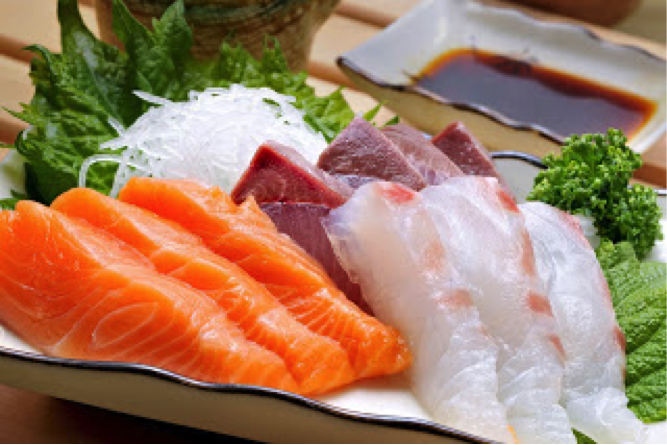
  • Plain raw tuna or salmon – with condiments on the side
  • Rice noodles – your choice of meat and vegetables

KOREAN:

Australian’s are renowned for loving their barbecues - well so do Koreans!

While the already mentioned tips can be applied to Korean dishes as well, my suggestion would be to try a Korean barbecue restaurant that cooks the meals in front of you. It’s a fun and easy way to choose what ingredients go into your dish.

Enjoy!
           

Sunday, January 8, 2017

Diet Tips:The low FODMAP diet in East and South East Asia

By Marina Iacovou (PhD Candidate and Accredited Practising Dietitian)


In October 2015, we published an article in the Journal of Neurogastroenterology and Motility, on how the low FODMAP diet can be applied to countries in East and South East Asia. There is growing interest in using food choice/dietary change to influence clinical outcomes in patients with irritable bowel syndrome across the globe, in particular the low FODMAP diet. This interest has also led us to testing international foods, sourced from other countries.
 
Major high FODMAP sources are frequently used in Asian cuisines, including: onion, garlic, shallots, legumes/pulses, and wheat-based products. Also many Asian countries are adopting some more Western dietary habits, such as the inclusion of lactose-containing milk and dairy products. Both of these factors are likely to be contributing the prevalence of IBS in Asia.


Traditional and commonly consumed dishes were considered in the article, for their FODMAP content - some of these include:
  •         Korean dishes: Kimchiand Doenjang (fermented side dishes) and Mandu (Korean dumplings)
  •         Japanese dishes: Gyozas(the equivalent to dumplings)
  •         Thai dishes: Tom Yum Soup
  •         Chinese and Hong Kong dishes: Man tou and Bao (wheat based buns), and red bean sweet soup and green (mung) bean soup, wontons and dim sum
  •         Taiwanese dishes: street food called stinky tofu (yes that’s right, it’s not a typo) and youtiao (deep fried dough sticks made with wheat flour)
  •         Vietnamese dishes: Hanh phu(fried shallots) and Nuoc mam cham(dipping fish sauce) and Pho bo tai nam(commonly known as Pho – a beef noodle soup)  


Although these dishes have not been tested for their FODMAP content as a complete meal, in their usual serving size, we have tested many of the ingredients found in the recipes. These ingredients are high in FODMAPS (onion, garlic, leek, shallots and mung beans), and therefore, the likely FODMAP content of these traditional dishes may be moderate-high FODMAP. For this reason, dietary approach, using the low FODMAP diet, holds great promise in treating IBS patients in East and Southeast Asia.
 
Common Asian ingredients that we have tested are also listed in the article with their corresponding FODMAP rating (low, moderate or high).There is no reason to miss out on these delicious Asian cuisines. Whether you are eating out, travelling, or cooking Asian dishes at home - there is always a low-moderate FODMAP option. 

You can find more tips on dining out Asian here.

Marina Iacovou, Victoria Tan, Jane G Muir, and Peter R Gibson – The Low FODMAP Diet and its Application in East and Southeast Asia; Journal of Neurogastroenterology and Motility, Volume 21 No. 4 October, 2015.